Ideas planted today are built into tomorrow's services.
3-15 Game
3-15 Game is a mobile puzzle game where players match three number bubbles so their sum becomes 15. The player swipes a number bubble to swap it with an adjacent bubble, and if the swap creates a combination whose sum is 15, the match is processed. This project experimented with repeat play and ranking competition through 60-second rounds, bonus time and bonus points based on combos, special bubbles such as striped bubbles and star bombs, and a global leaderboard.
Follow
0
Overview
"3-15 Game" is a mobile puzzle game where players move number bubbles to create combinations whose sum is 15.
In a typical 3-match puzzle, three or more identical images or bubbles are removed when matched. Instead of following that rule as-is, this project changed the rule so that players swipe number bubbles to swap their positions and create a set of three numbers whose sum is 15.
What I wanted to validate through this project was implementing a global leaderboard with Supabase and how much I could use Cursor-based vibe coding in a controlled way.
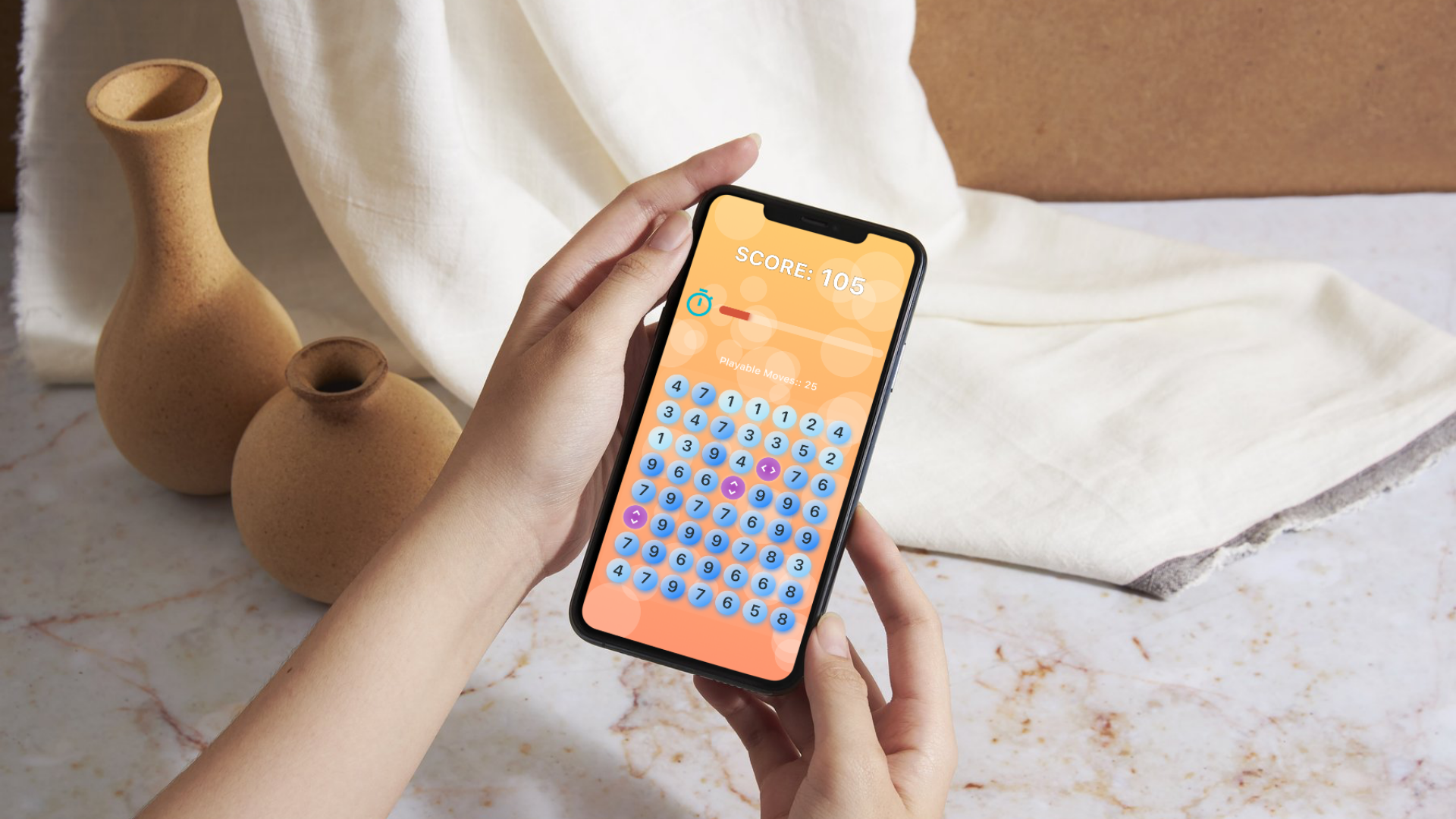
Main image
Participants
Name
Organization
Role
JaeKyeong Sim
—
Developer
Period
2025-06-01 – 2025-07-31
Technologies Used
FlutterUsed to develop a mobile app that supports both Android and iOS
SupabaseStoring and retrieving global leaderboard scores
Google AdMobApplying advertisements inside the app
Links
Background
Through previous projects, I had gained some experience with Flutter app development and the app store release process. For this project, I wanted to go beyond simply completing and releasing an app and directly design a game structure that users could play repeatedly.
The starting point was the idea, "What if I combined a game mechanic based on making a target number sum with a 3-match puzzle?" 3-match puzzles have the advantage of intuitive rules that anyone can understand easily. However, I felt that simply implementing the standard mechanic of matching three identical bubbles would not make the project distinctive enough.
So I applied the rule of "three number bubbles whose sum is 15" instead of "three identical images." Rather than simply finding the same shapes, players need to move number bubbles and quickly judge which combinations add up to 15. I wanted to create a game that blends a familiar puzzle structure with calculation-based puzzle elements, encouraging players to act, calculate, and try again within a short time.
Most of my previous apps had focused on local features. This time, I wanted to store game scores in an external database and implement a global leaderboard where users could compare rankings with other players. I used Supabase for this. Supabase provides a Postgres database for each project, and a Flutter client can also interact with the database through the Supabase library. [Supabase - Database Overview][Supabase - Flutter Reference]
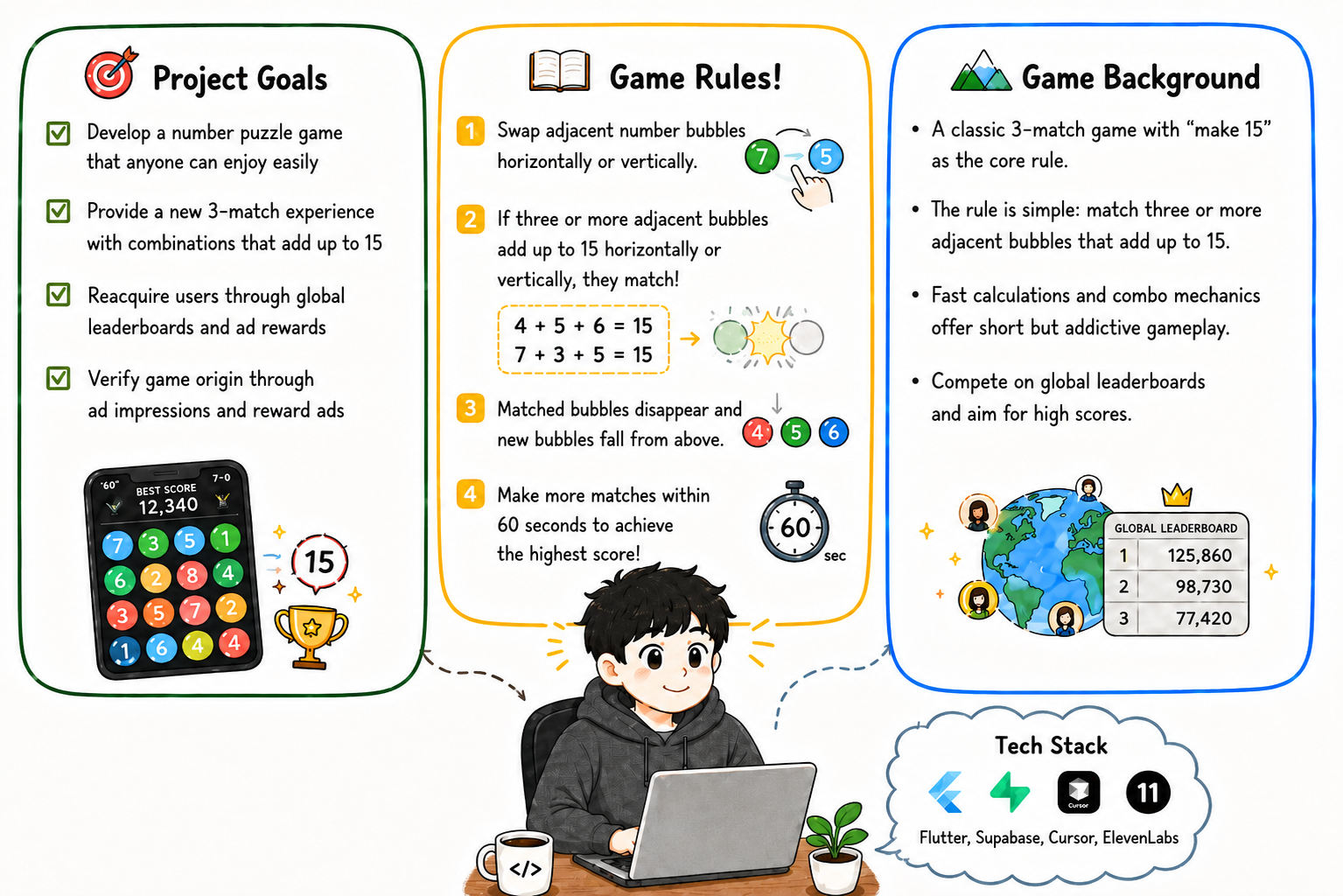
The goals of this project were as follows.
Goal
Reason
Experiment with a variation of 3-match rules
To create a new puzzle experience based on a rule where number sums become 15, instead of matching identical bubbles
Implement a Supabase-based leaderboard
To store scores in an external database and provide ranking competition between users
Control Vibe Coding
To directly review code generated by Cursor and check how well the code structure could be managed as features expanded
Background and Goal
Key Features
Number Bubble Matching
Swipe a number bubble to swap it with an adjacent bubble, and remove the bubbles when the swap creates three adjacent numbers whose sum is 15
60-Second Rounds
A fast-paced play structure where players try to achieve the highest possible score within a short time
Combo System
Provides larger bonus time and bonus score rewards as consecutive matches accumulate
Striped Bubble
Created when four or more number bubbles are matched, removing an entire row or column based on the movement direction
Star Bomb
Created when a cross match occurs where horizontal and vertical matches are completed at the same time, removing all number bubbles except special bubbles when used
Global Leaderboard
Stores scores in Supabase and lets users compare rankings with other players
Unlimited Play
Allows repeated play without hearts or life limits
In-App Ads
Experimented with a free-app advertising revenue model using Google AdMob, with a reward flow that provides extra time after watching an ad
Development
Setting the Development Goals
The goals of 3-15 Game were to implement a global leaderboard based on a Supabase database and to use Cursor-based vibe coding more systematically than before.
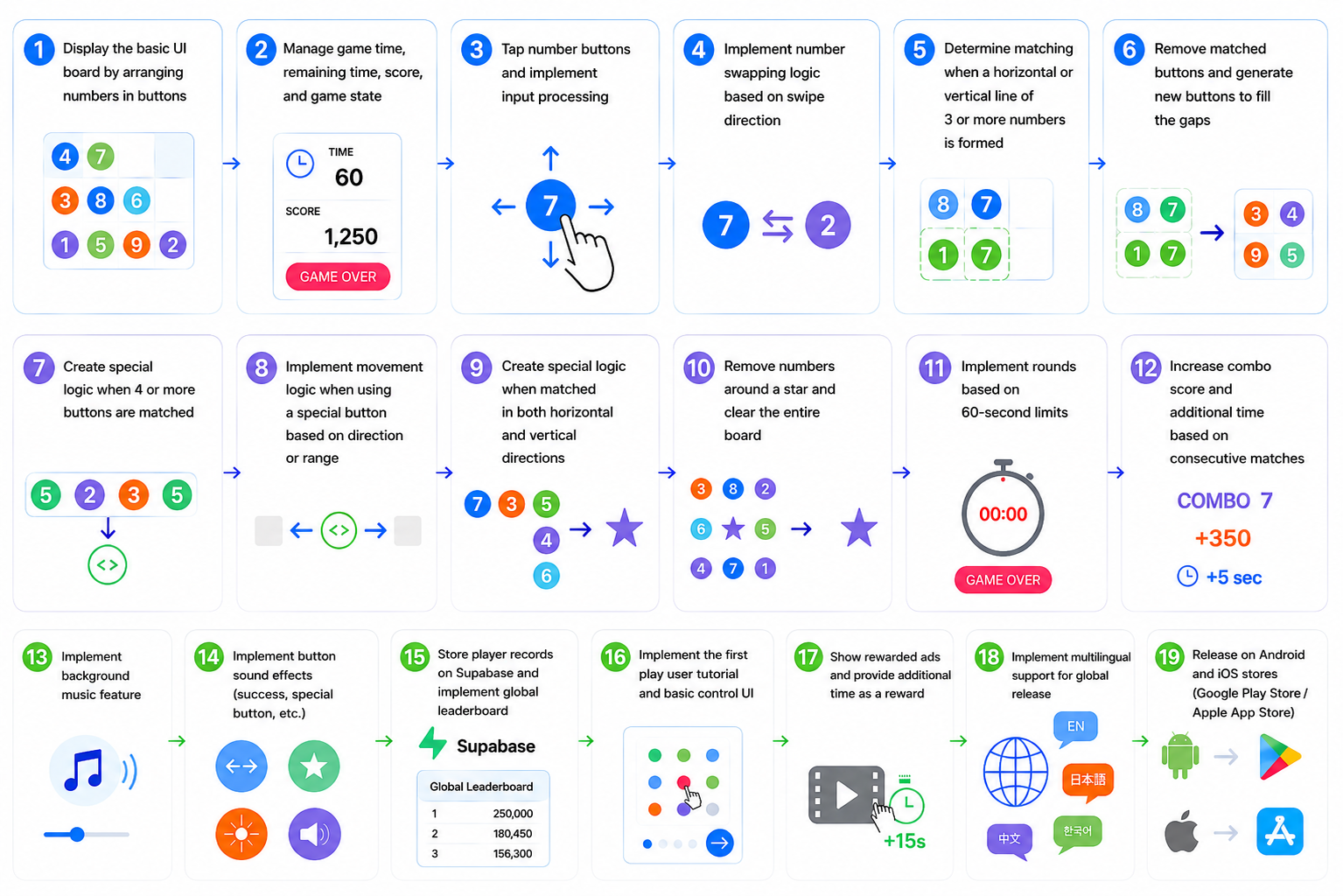
I divided the feature scope into stages from the beginning. First, I implemented the core game rule: swiping a number bubble to swap it with an adjacent bubble and removing three numbers whose sum is 15 as a result of the swap. On top of that, I sequentially added 60-second rounds, combo rewards, striped bubbles, star bombs, ad rewards, and a global leaderboard.
What I wanted to verify through this project was not simply whether I could complete a game. By using Supabase to store user scores and provide a global leaderboard, I wanted to see how ranking competition could affect repeat play and app engagement. I also wanted to experiment with using Cursor-based vibe coding in a more controlled way, improving development speed and efficiency while still managing code quality.
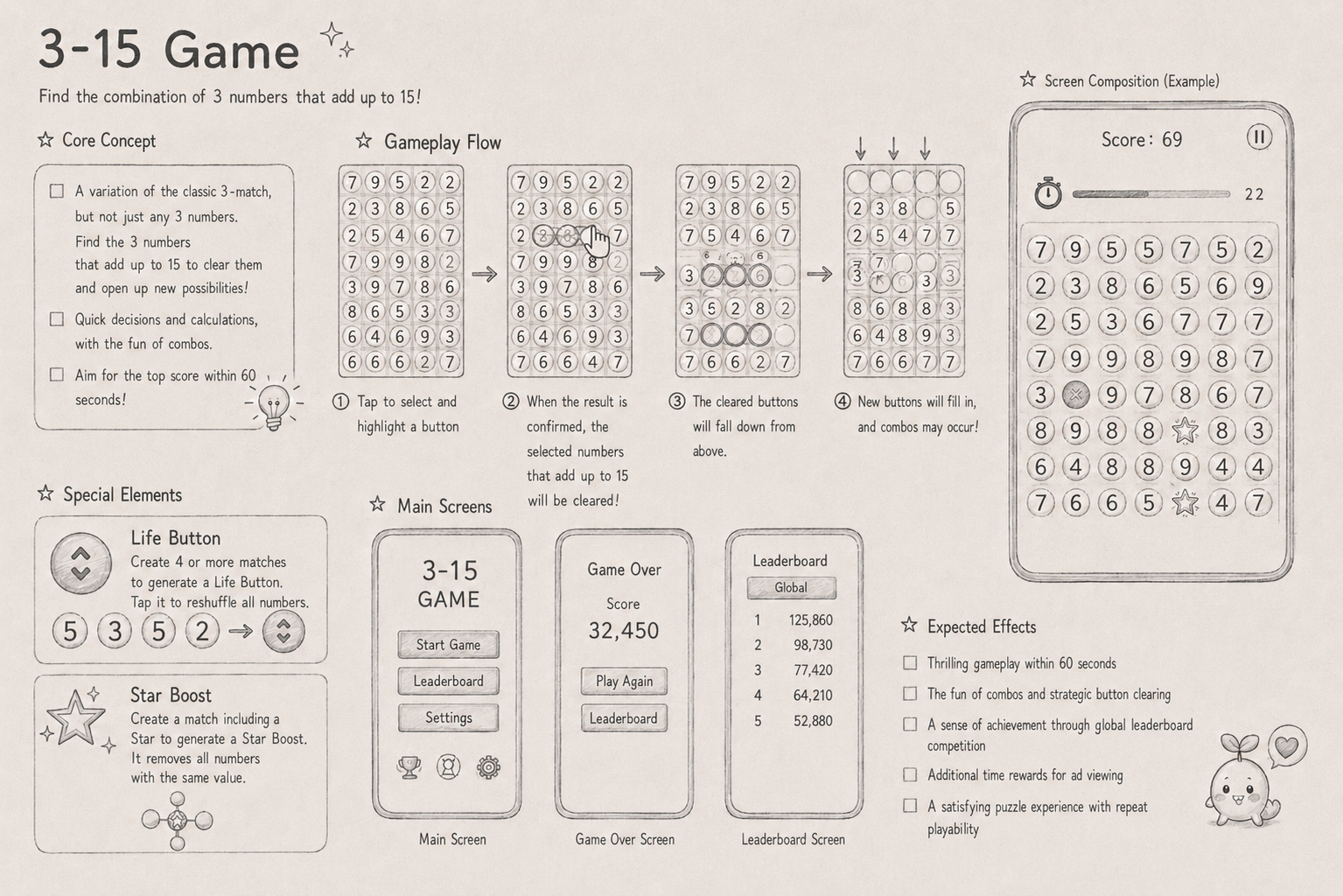
Concept for 3-15 Game
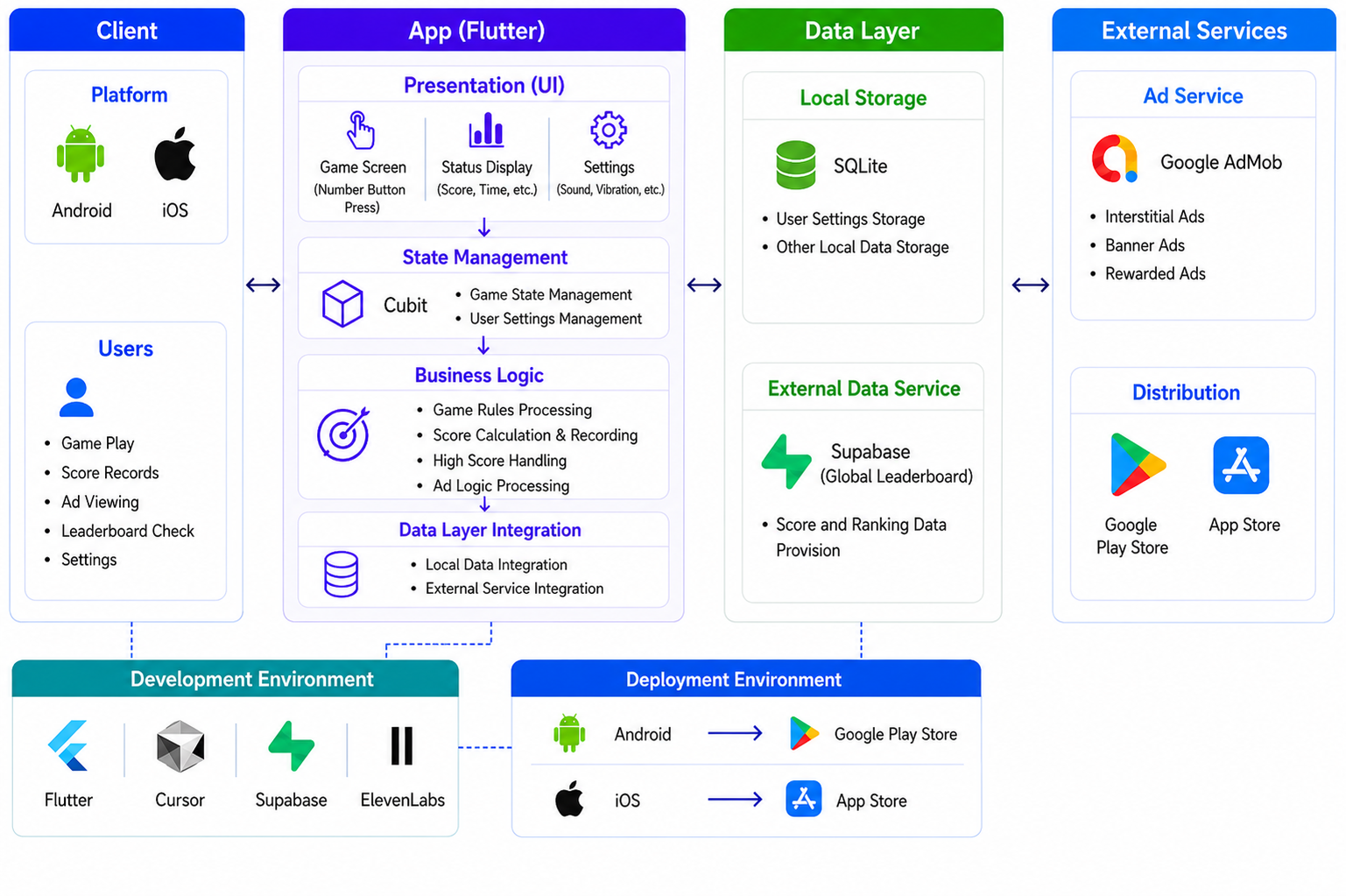
System Architecture
3-15 Game was implemented with a structure where the Flutter app handles the game board, swipe input, number bubble swapping, match detection, timer, combos, and special bubble generation internally, while score data is stored in an external database through Supabase. When the player touches a number bubble and swipes in a direction, the bubble swaps positions with the adjacent bubble in that direction. If the swap creates a combination whose sum is 15, the match is processed and the score is updated. Instead of building a separate server directly, I used Supabase as the external data store for the global leaderboard.
Component
Role
Game Board UI
Displays number bubble placement, selection state, swap results, and removal results
Swipe Input Handling
Detects the swipe direction based on the number bubble touched by the player and identifies the adjacent bubble to swap with
Bubble Swap Handling
Swaps the selected number bubble with the adjacent bubble in the swipe direction
Match Detection Logic
Checks whether three adjacent numbers in horizontal or vertical directions sum to 15 after a bubble swap and determines whether a match exists
Timer and Combo Logic
Runs 60-second rounds and grants different amounts of bonus time and bonus score based on the accumulated combo level
Special Bubble Logic
Creates a striped bubble when four or more bubbles are matched,
and creates a star bomb when a cross match occurs, expanding the board-clearing range
Score Management
Reflects regular matches, combo levels, and special bubble effects in the score
Leaderboard Screen
Displays saved records as rankings
Supabase Integration
Stores scores after the game ends and retrieves the global leaderboard
Ad Module
Displays Google AdMob ads inside the app
Multilingual Resources
Manages app text for each supported language
System Architecture Diagram
Core Implementation Flow
Implementation Flow
Game Rule Design
The first thing I decided was the core rule of the game. Instead of matching identical bubbles like a traditional 3-match puzzle, I designed the rule so that bubbles are removed when the sum of three number bubbles becomes 15.
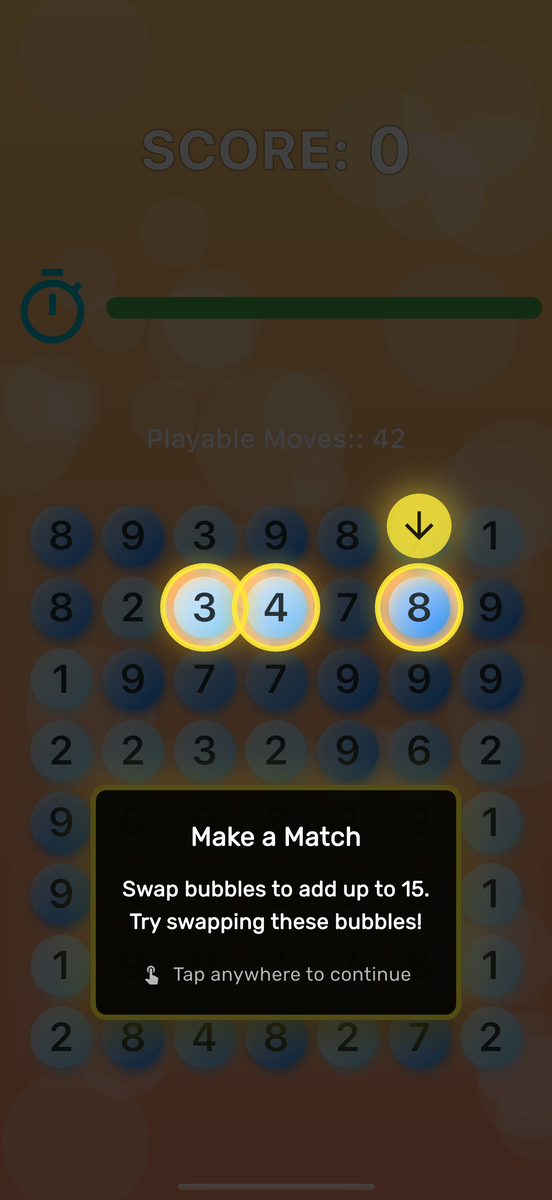
For example, when three number bubbles such as 4, 5, and 6 are placed side by side horizontally or vertically, they are removed because their sum is 15. The player swipes number bubbles to swap them with adjacent bubbles, and if the swap creates a valid combination, the match is processed. This rule was chosen to create a calculation-based experience where players quickly find number combinations rather than making simple visual matches.
Basic rules screen
Implementing the Game Board and Post-Swap Match Detection
On the game board, I needed to manage the positions of number bubbles, selection state, swipe direction, and swap results together. When the player touches a specific number bubble and swipes in a desired direction, the game finds the adjacent bubble in that direction and swaps the positions of the two bubbles.
After the bubbles are swapped, the game checks number combinations in horizontal and vertical directions based on the updated board state. A match is accepted only when three adjacent number bubbles add up to 15, and then score updates, bubble removal, and new bubble filling are processed in order. By separating input handling, bubble swapping, match detection, and board updates, I structured the game so that the game state would not become tangled.
Implementing 60-Second Rounds and the Combo Structure
I wanted the game to be a fast challenge that players attempt within a short time, rather than a puzzle that continues for a long time. So I set the basic play time to 60 seconds and designed the game so players would try to achieve the highest possible score within the time limit.
When consecutive matches occur, the combo level rises, and as combos accumulate, bonus time and bonus score become larger. This structure was designed to encourage players not to stop after a single match, but to keep searching for the next combination.
Implementing Special Bubble Generation and Effects
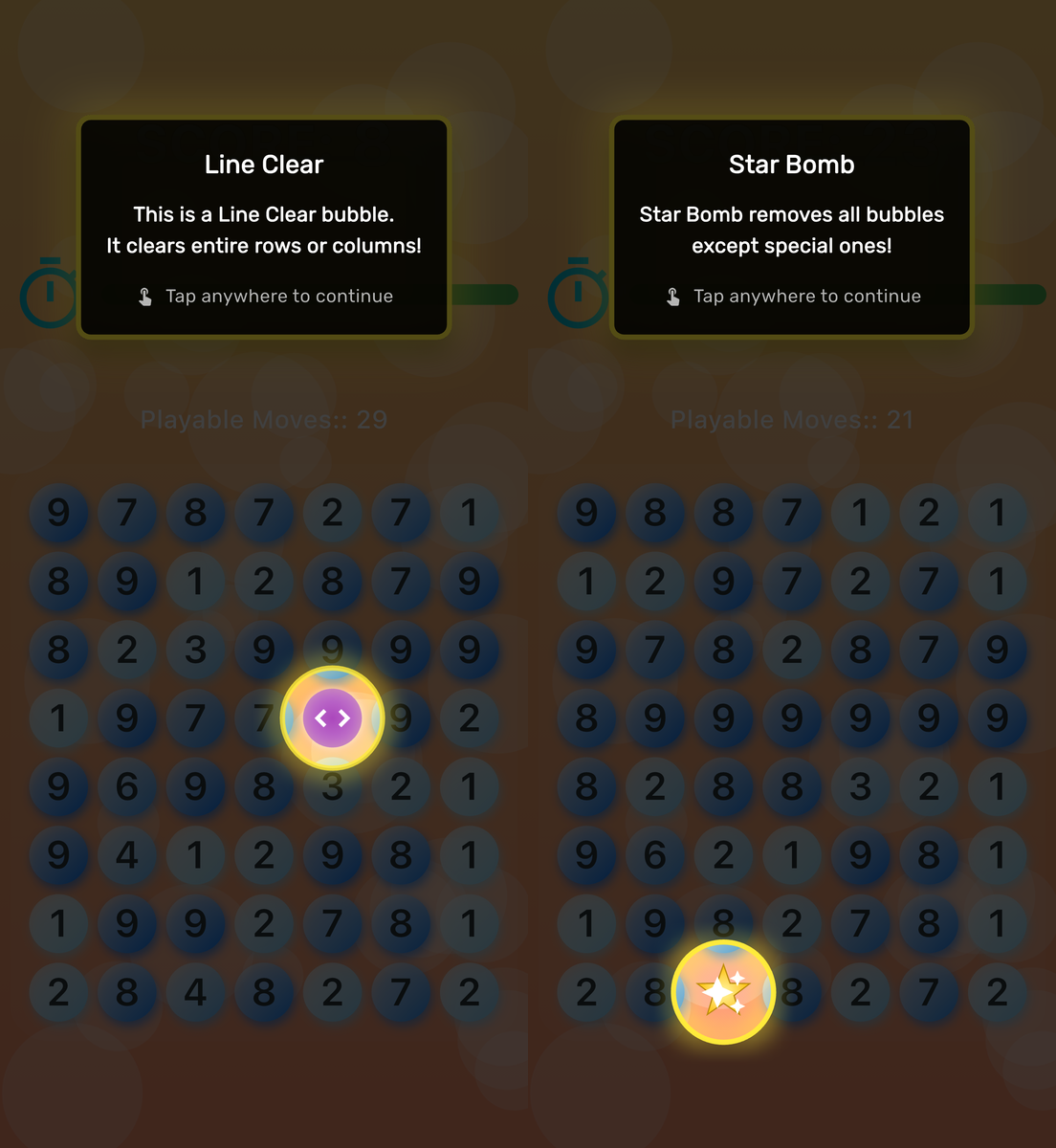
To add variety to the game, I added striped bubbles and star bombs. A regular three-bubble match removes only those number bubbles, but when four or more number bubbles are matched, a striped bubble is created. When a cross-shaped double match occurs where horizontal and vertical matches are completed at the same time, a star bomb is created.
Special Bubble
Effect
Creation Condition
Striped
Removes the entire corresponding row or column based on the direction in which the player moved the bubble
A 15-match made with four or more number bubbles
Star Bomb
Removes all number bubbles except special bubbles
Horizontal and vertical matches are completed as a cross at the same time
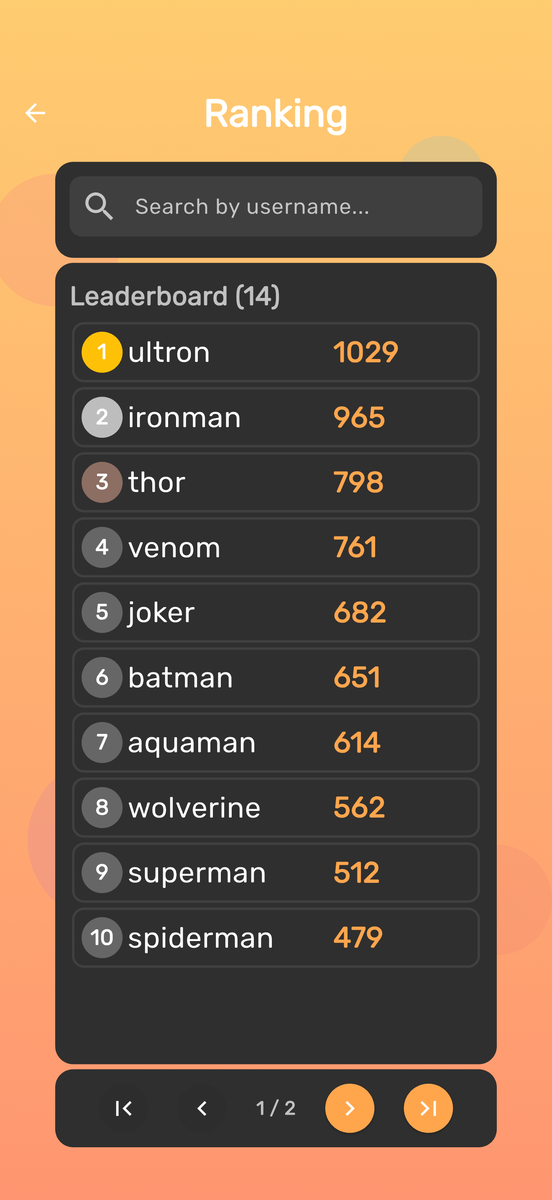
After the game ends, the user’s score is stored in Supabase, and a list of top scores is loaded and displayed on the global leaderboard. This allows users to compare their scores with other players.
Supabase provides a Postgres database for each project, and Flutter clients can also interact with the database through the Supabase library [Supabase - Database Overview][Supabase - Flutter Reference]. In this project, I used that structure to implement score storage and retrieval without directly building a separate server.
Leaderboard screen
Implementing the Ad Reward Flow
I applied a flow that provides extra time when the player watches an ad after game over or when time is running low. Because the reward should be granted only after confirming that the ad has been watched, I needed to manage both ad display and game state handling together.
Vibe Coding Approach
This project was also developed using Cursor with a vibe coding approach. In the early stages, it helped me quickly build the foundation of the overall behavior, such as generating the game board, placing number bubbles, and implementing basic match detection logic.
However, as the number of features increased, the code structure became increasingly complex, and the burden of reviewing and modifying generated code also grew. Problems occurred frequently when modifying areas where several pieces of logic interacted, such as animation handling, bubble removal and new bubble generation, and special bubble handling. There were also cases where the desired requirements were not reflected all at once, or modifying one feature affected another feature.
I also faced greater difficulty when changing existing features in a completely different way or adding new feature ideas during the project. As features were added or existing implementations were changed, the code flow became easy to tangle, and it became increasingly difficult to track and control changes as the work progressed.
Through this experience, I confirmed that AI-assisted development can help increase initial implementation speed, but as the project grows, the developer must take direct responsibility for structural design and quality management. METR’s 2025 study also reported cases where experienced open-source developers took longer to complete tasks when using AI tools under certain conditions. Although this study cannot be generalized to every situation, it shows that the cost of reviewing and modifying AI-generated output is important in the actual development process. [METR - Measuring the Impact of Early-2025 AI on Experienced Open-Source Developer Productivity]
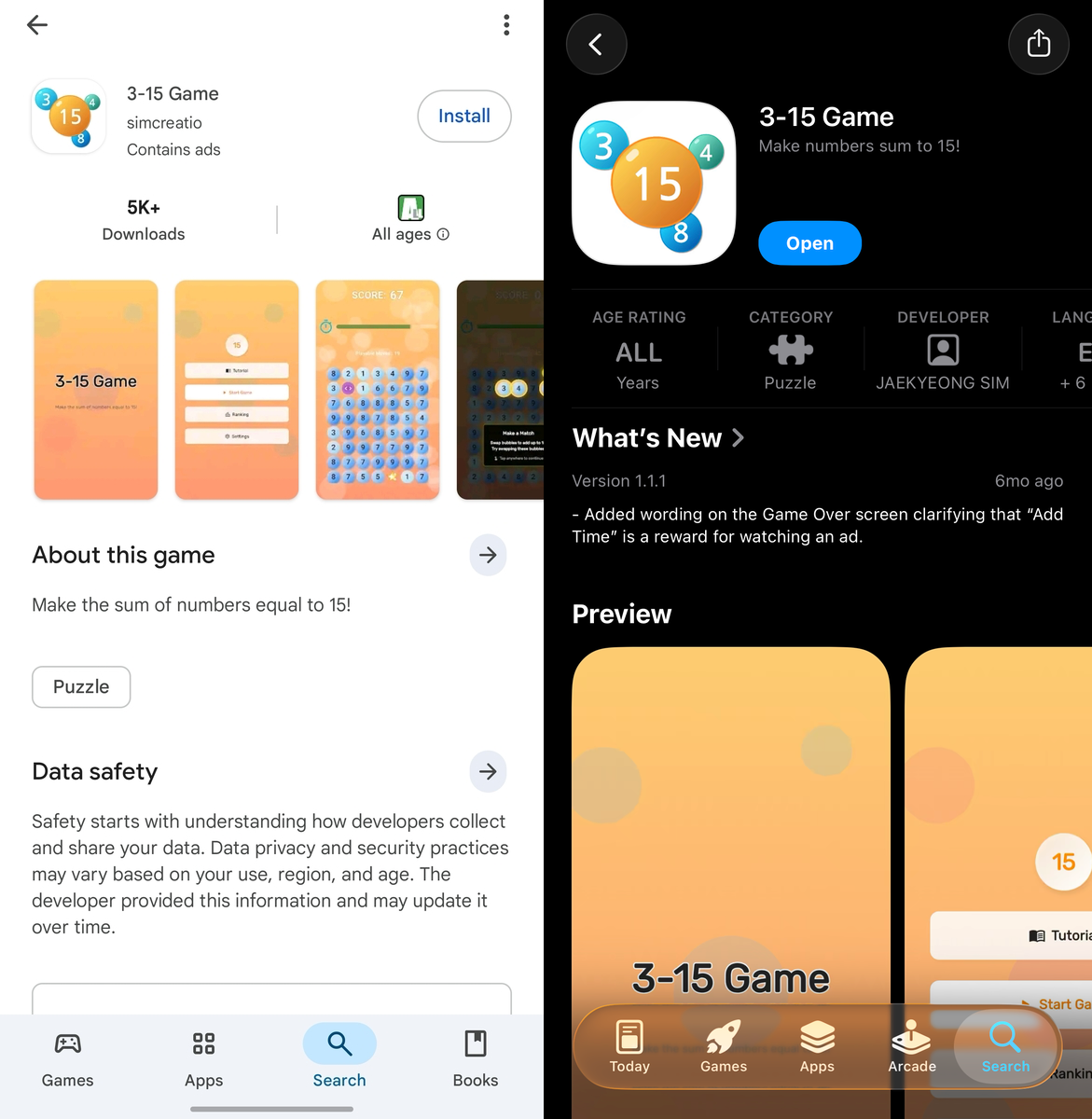
Store Release
[Left Image]: Appearance on Google Play Store, [Right Image]: Appearance on Apple App Store
Achievements
Developing a number-sum-based 3-match puzzle game app
Success
Implementing a Supabase-based global leaderboard
Success
Validating gameplay that encourages repeat play
Failure
Strengthening code review for vibe-coded output
Failure
This project achieved most of the technical goals I wanted to validate. I implemented a global leaderboard with Supabase and developed the project while reviewing code generated through Cursor-based vibe coding more thoroughly than before.
However, I also identified limitations in terms of product quality and gameplay. The number-sum rule was a differentiated attempt from a developer’s perspective, but it could place a higher cognitive load on users than a typical 3-match puzzle. Through this, I learned that implementing a feature and creating a game that users want to play repeatedly are different challenges.
Lessons Learned from the Project
First, I learned that intuitive rules are more important than novelty in game design. The rule of finding three numbers whose sum is 15 was distinctive, but it did not lead to a structure that users could immediately understand and want to repeat.
Second, I confirmed that a leaderboard can supplement the core fun, but it cannot replace it. Even with global ranking competition, it is difficult to create strong repeat play if the game itself is not fun enough.
Third, through Supabase, I was able to implement external score storage and leaderboard retrieval without directly building a server. This gave me experience with the basic flow of connecting an external database to a mobile app.
Fourth, I learned that vibe coding is useful for quickly drafting an initial version, but it does not automatically guarantee code structure or quality. As features increased, the developer’s role in understanding, modifying, and managing the overall structure of generated code became more important.
As a result, 3-15 Game achieved meaningful results in terms of technical implementation and actual release, but from a product perspective, it left the challenge of thinking more deeply about the intuitiveness of game rules and the structure for repeat play.